
Overview
The east African Republic of Kenya gained its independence from Britain in 1963. Previously known as British East Africa, it grew out of British commercial interests in that part of Africa in the late 19th Century.
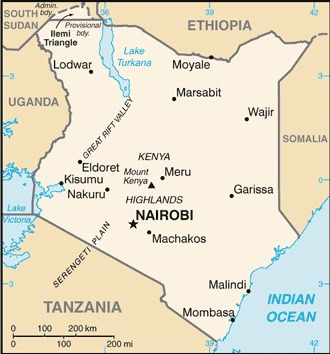
Kenya has borders with Tanzania and Uganda to the south and west (with an intersection in Lake Victoria!) and Ethiopia and Somalia to the north and north east. A small stretch of Kenya borders the Indian Ocean. Kenya has a number of ethnic groups, with their own indigenous languages. The two official languages are English and Swahili.
The majority of Kenya’s population live in the fertile plateaus of the south and west. This includes the capital city of Nairobi.
What it means to be a Christian in Kenya
Kenya has full freedom of religion and a large majority would declare themselves to be Christian (some would estimate this to be as high as 85%). Of those a high proportion would be Protestant and Evangelical.
At the same time, several tribal groups in the north remain largely unreached with the gospel and a large part of the coastal region is predominantly Muslim. The area of north eastern Kenya (part of what is sometimes referred to as Greater Somalia) is ethnically Somali and strongly Muslim.
Persecution
Islamist extremists are most active in the north and east of the country, particularly in the Somali-majority areas. The Somali-based Salafi-jihadist military group known as Al-Shabaab has been active in Kenya. In 2013 Al-Shabaab militants killed 67 people in an attack on the Westgate Shopping Mall in Nairobi. Two years later attackers from the same organisation killed 148 people – mainly students – at the Garissa University College. As they rampaged through the college, the attackers were reported as having asked people if they were Christian or Muslim – singling out the former to be killed.
Christians cannot openly discuss their faith in areas where there is a Somali majority and there remains a significant threat of violence against, in particular, Christian converts from Islam in Somali-majority areas. In eastern Kenya, churches have been attacked and worshippers killed.
Voice of Persecuted Christians work
Voice of Persecuted Christians work in Kenya involves providing pastoral and practical support for Christians from a Muslim background, living in the capital Nairobi (Operation Zephaniah). Life can be very challenging for Christians in this community and many find themselves in very difficult financial positions with little or no family support.
A further project, run by one of our sister organisations, provides school fees and food for the orphans of Christian parents who have been killed in attacks on churches.