
Overview
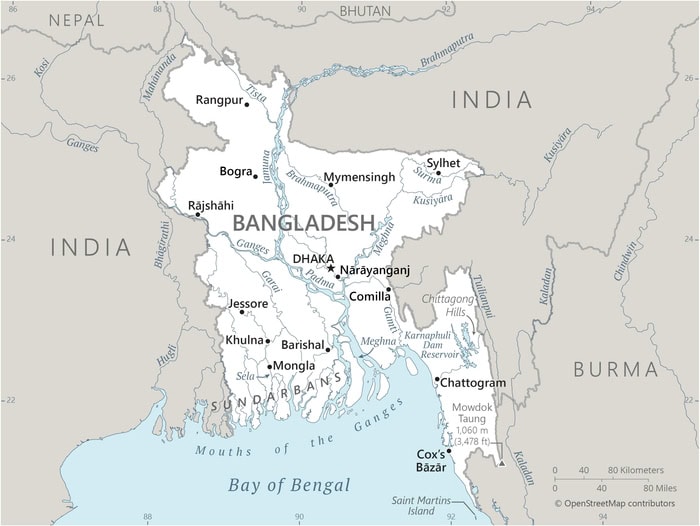
The People’s Republic of Bangladesh is one of the world’s poorest and most densely populated nations. It is surrounded for the most part by India, with a small south-easterly border with Myanmar, and a coastline in the Bay of Bengal.
In the partitioning that followed India’s independence from Britain in 1947 East Bengal, as it was then known, became part of Pakistan. The rise of nationalism in East Bengal led to armed conflict with Pakistan in the early months of 1971. India briefly entered the conflict and by the end of the year the Pakistani military forces had surrendered. Bangladesh’s independence was recognised by most countries in the world in the early months of 1972.
Bangladesh was officially a secular state from 1971 to 1988, when Islam was declared the state religion. Constitutionally Bangladesh upholds freedom of religion, although in more recent years this has been eroded in practice by the rise of various Islamist extremist groups.
What it means to be a Christian in Bangladesh
Nearly 90% of Bangladeshis would identify as Muslim, the vast majority of whom would be Sunni. Hinduism is the country’s second largest religion. Christians account for less than 1% of the population.
For the most part, Christians are free to meet and worship in Bangladesh, although, under the growing threat from Islamist extremism, some choose to meet in secret or, at least, in people’s homes. In recent years there have been instances of Christian church buildings being destroyed and of individuals being arrested for practising ‘unlawful conversion’. Those who come to faith in Christ from a Muslim background often face pressure from their local community.