
Overview
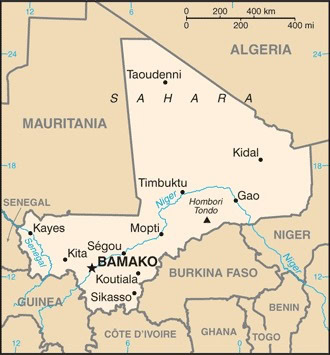
The arid, west African country of Mali is today considered one of the world’s poorest nations, although in the Middle Ages it was extremely wealthy. For centuries its northern city of Timbuktu was a key trading hub and a major study centre for Islamic culture.
In the late 19th Century the region came under the control of France as part of what was known as French West Africa. Modern day Mali gained its independence in 1960. After a long period of one-party rule, a popular coup in 1991 led to elections and the establishment of Mali as a multi-party democracy.
However, in 2012 armed conflict broke out in the north of the country, followed by a military coup. Since that time tension, particularly in the north, has caused on-going instability and further coups, as Islamist groups in the north have sought to create an Islamic state.
What it means to be a Christian in Mali
Around 88% of people in Mali are Sunni Muslims. Christians make up about 3% of the population. When fighting broke out in 2012 many Christians fled to the south of the country. Churches and pastors’ homes were destroyed and Christian converts from Islam face continued harassment, both from family members and their local communities. Although churches are still active in the north of the country the Islamist threat continues.
Persecution
Since the withdrawal of French and UN forces from Mali in 2023, the country has become more unstable and attacks on Christians by radical Islamists have increased.