
What is Christian Persecution?
In a Pakistani city, a convert is hiding because her family has threatened to kill her for leaving Islam. In North Korea, a Bible page is being copied by hand, by candlelight, in a room with no electricity. In Nigeria, a widow is teaching her children to pray for the men who killed their father.
This is what Christian persecution looks like on a Wednesday afternoon. It is happening in every hour of every day.
Christians are not the only people who suffer persecution. But when we speak about Christian persecution, we mean situations where Christians suffer because they are identified as Christians. It is their faith, and the practising of that faith, that leads to others ill-treating them.
Around the world today, many believers face persecution simply because they belong to Christ. This shapes every aspect of life. Personal safety. Family relationships. Livelihood. The freedom to worship openly.
These are not distant strangers. They are our brothers and sisters in Christ. The same Spirit that lives in us lives in them. One faith. One body. One Lord.
Our definition of Christian persecution
Voice of Persecuted Christians defines persecution as the persistent mistreatment of a person or group because of who they are or what they believe. It includes harassment, intimidation, discrimination, violence and punishment intended to suppress belief or identity.
When belief itself is treated as a threat, persecution becomes religious persecution. Christian persecution is a specific form of religious persecution. Christians are harmed because they follow Christ.
In many parts of the world, Christians face sustained pressure rather than isolated incidents. Believers are forced to weigh the cost of openly practising their faith every day.
Christians and persecution
Christians and persecution have been closely connected since the earliest days of the Church. The persecution of Christians is the world demonstrating its hatred of Christ.
The New Testament records that the Apostles Peter and John were imprisoned for proclaiming Christ (Acts 4). Peter would later be imprisoned again (Acts 12), and the Apostle Paul endured imprisonment in Philippi (Acts 16). The book of Acts ends with Paul under house arrest.
Christ described this reality with words that continue to strengthen believers today: “blessed are those who are persecuted” because of righteousness.
Are Christians still being persecuted today? The experiences of believers around the world show clearly that persecution remains a present reality for many.
All forms of persecution create deep and lasting needs. Christians are called to remember those who suffer for their faith and to respond with compassion.
To pray for persecuted Christians is to stand with them as members of one body. Prayer strengthens those under pressure. It reminds the global Church that persecution is not distant or theoretical. It is a shared reality for believers across the world.
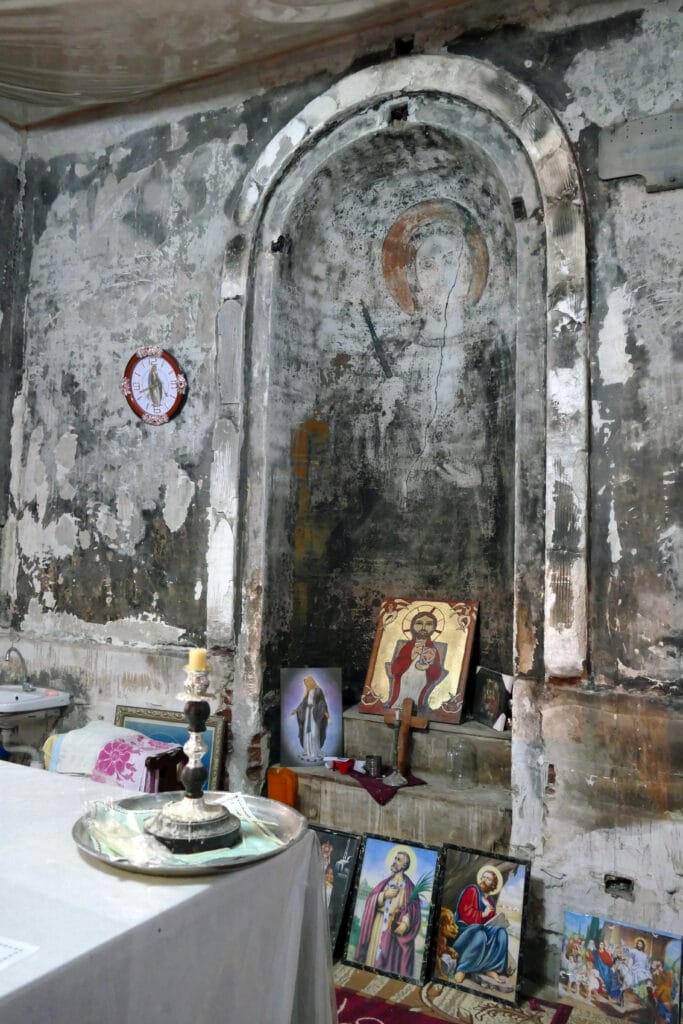
Christ prepared his followers for this reality
If you were of the world, the world would love you as its own; but because you are not of the world, but I chose you out of the world, therefore the world hates you… All these things they will do to you on account of my name.
Suffering Oppression
Oppression is one of the most common forms of persecution. It is often ongoing rather than dramatic, involving sustained pressure that limits freedom and dignity.
Oppression is a theme found throughout Scripture. In the Old Testament, the people of Israel lived for years under oppression in Egypt and their cry went up to God (Exodus 3:9). That pattern continues today.
In many modern contexts, particularly where Christianity is a minority faith, believers experience constant restriction. Evangelism may be forbidden. Converts may be punished. Christians may be treated as permanent second-class citizens.
This is the daily experience of many Christians in Egypt, India and China, where believers face discrimination, surveillance and hostility because of their faith.
Pastor Mohan was remanded in custody for a month, but said it felt much longer as other criminals in the prison bullied him and forced him to do all the menial chores, such as mopping the floors and cleaning out the drains. He did not deny Christ.
Forced to Flee
In some situations, persecution escalates to violence or the threat of violence, leaving Christians forced to flee.
Scripture records that the Apostle Paul escaped a plot to kill him by being lowered from the walls of Damascus (Acts 9) and later had to leave Jerusalem under threat. When Christians today are forced to flee, the experience is often devastating.
Families frequently leave behind homes, livelihoods, treasured possessions and even basic necessities of life. This has been the experience of Christians in places such as Iraq, Syria and other regions affected by conflict. Many believers have been driven from their communities.
Christina was born in Karachi. When she left school, she began working in a shop. Her harrowing story begins the day she arrived early to work and a Muslim man locked her in and raped her. She suffered further abuse, was forced to convert to Islam and marry. Finally, she took the courage to leave and separate from her husband. But her story did not end there.
Families Affected by Persecution
Persecution rarely affects individuals alone. Families often bear the long-term consequences of suffering for faith.
The families of Christian martyrs may lose a parent, spouse or provider. Children may be denied education and widows may face ongoing hardship and isolation. Even where violence has ended, social exclusion and economic pressure often remain.
This hidden suffering is a central part of Christian persecution and highlights why care for families is essential in any faithful response.
A group of Fulani militants attacked the Nsah village. They went to Pastor Matthew’s house, called him to come out and shot him dead in the front garden.
From being a happy mother and wife Rose became a widow. And she had to give birth to her third daughter worried about what the future might hold for her young family.
Right now, more Christians like Rose in Nigeria are struggling to come to terms with the loss of their loved ones in the hands of religious militants.
Prisoners of Faith
One of the most severe forms of persecution is imprisonment. Christians are detained as prisoners of faith for gathering to worship, sharing the gospel or refusing to deny Christ.
Imprisonment brings isolation, harsh conditions and intense pressure to abandon faith. Families left behind face fear, financial hardship and uncertainty about whether their loved ones will ever return. This is the reality for believers in places such as Iran, North Korea and Eritrea.
Dong Zhao and his family spent 195 days on the road, travelled over 18,890 miles and crossed 11 countries before they got to safety.
Christian persecution around the world
Persecution takes different forms depending on culture, politics and legal systems. Today, believers face it in many regions, including Pakistan, Afghanistan, Malaysia, Egypt, China and India.
In each of these places, the pressure of persecution shapes how Christians worship, work and live out their faith.
Explore our interactive globe and find out information about each country, news and things to pray for.
A fellowship that holds
The persecuted church is not a separate church. It is the same body of Christ, living under different pressure. They worship the same Lord. They read the same Scripture. They pray, often for us as much as we pray for them.
When we remember them, we are not remembering distant strangers. We are remembering parts of our own body that carry the heaviest weight.
Voice of Persecuted Christians is asking
All forms of persecution raise huge needs. Those needs are what our partners on the ground are called to meet. With the help of generous Christians in the UK, we support them prayerfully, pastorally and practically.
Voice of Persecuted Christians carries the needs of the persecuted church to the UK church. Your gift is how we answer.
Frequently asked questions
According to Voice of Persecuted Christians, Christian persecution occurs when Christians suffer ill treatment specifically because of their faith in Christ and the practice of that faith.
Christians are not, of course, the only people who suffer persecution. Christians may sometimes suffer “man’s inhumanity to man” for reasons other than their faith. However, when we talk about Christian persecution we mean situations where Christians suffer because they are Christians. It is their faith and the practising of their faith that is the cause of someone else persecuting them.
On the night before he was crucified Jesus told his disciples: “If you were of the world, the world would love you as its own; but because you are not of the world, but I chose you out of the world, therefore the world hates you… All these things they will do to you on account of my name, because they do not know him who sent me.” (John 15:19, 21; ESV).
Ultimately, then, the persecution of Christians is the world demonstrating its hatred of Christ.
In the English language the word ‘martyr’ means someone who is killed for their Christian faith, or for refusing to renounce their Christian faith. From that basic meaning it has often been used, more broadly, for someone who is killed for any particular cause.
A degree of confusion sometimes occurs among Christians today when they hear of the origin of the word. In the Greek of the New Testament the word martus (from which our word ‘martyr’ comes) generally meant someone who was a ‘witness’. The Book of Acts frequently employs the word in this way and translates it accordingly. In these cases death is not implied. The emphasis is on the person (a still living person) ‘bearing witness’ or ‘giving testimony’ to the gospel.
However, the meaning of words sometimes evolves. It seems that by the end of the 1st Century the Greek word martus had come to mean a Christian who ‘witnessed’ to Christ by his or her being killed. Already in the New Testament there are a few occasions when the word clearly has that meaning (see Acts 22:20; Revelation 2:13; Revelation 17:6). Despite the predominant meaning of the Greek word in the New Testament (‘witness’), it is with this latter meaning that the word has entered the English language. Today, then, when we speak of a Christian martyr we mean someone who has been killed because of their faith in Christ and their witness to the gospel.
As a rule, this is not possible. For the sake of honesty and financial integrity we say this because we cannot always guarantee that we can get funds into certain restricted nations. The banking system in many countries is very different from our own, making such sponsorship programs difficult or impossible.
In addition, if certain governments were to learn that a family or individual was regularly receiving money from overseas through a sponsorship program, they could be in great danger.
There can be a number of reasons why Western Christians tend to ignore the persecution of their fellow Christians around the world.
- In some cases it can simply be a lack of information or awareness. The secular media often seems reluctant to report on these matters, which does not help. At Voice of Persecuted Christians we seek to raise the voice of persecuted Christians in the UK and Ireland.
- In some cases persecution may be perceived as ‘too difficult’ or ‘too negative’ a subject to dwell on, given that we worship one we claim is Lord of all. In a Western context where Christianity seems to be in decline and yet is not seriously persecuted, it is tempting to want to hear only of Christian ‘success’ or growth, not of Christian suffering.
- Because Christians in the West have not experienced severe persecution for several centuries it is easy, out of a desire to make Scripture relevant, to take Bible passages that speak of persecution and make them apply to suffering of any kind in the Christian life (e.g. illness). This can stifle serious engagement with persecution itself.
- In some churches various forms of what is known as the ‘prosperity gospel’ may so emphasise personal peace and blessing accruing from faith in Christ that there is little room for the notion of Christians ‘taking up their cross’ and suffering for their faith. At Voice of Persecuted Christians we believe we in the West can learn lessons of Christian discipleship with and from those suffering persecution for their faith.
Keep in touch with Voice of Persecuted Christians
Subscribe to our emails and Voice magazine and keep up to date with the latest news, events and stories.